5 Common Mistakes When Installing Ceramic Fiber Boards - FOVO
- Share
- Issue Time
- Aug 6,2026
Summary
Avoid these 5 common mistakes when installing ceramic fiber boards in your furnace. Learn proper installation techniques for expansion gaps, anchoring, and surface treatment.
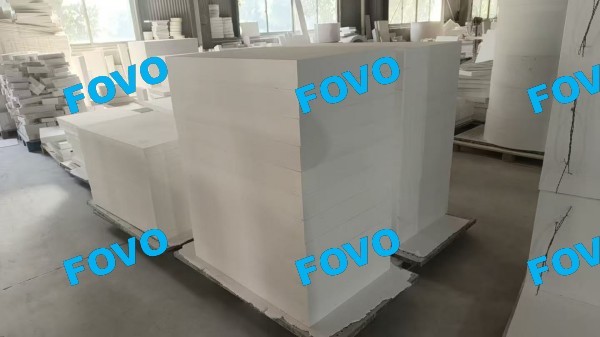
5 Common Mistakes When Installing Ceramic Fiber Boards
Ceramic fiber boards are one of the most effective high-temperature insulation materials available — but only if they're installed correctly. Even the highest quality board will underperform or fail prematurely if installation is done improperly. Here are five common mistakes we see regularly, and how to avoid them.
At FOVO Thermal, we manufacture ceramic fiber boards from 1400°C to 1900°C with custom sizes and no minimum order quantity. We've worked with furnace manufacturers, heat treaters, and refractory contractors worldwide — and we've seen the same installation mistakes repeated again and again.
Mistake #1: Ignoring Expansion Gaps
Ceramic fiber boards expand when heated. If boards are installed tightly against each other or against the furnace shell, thermal expansion creates compressive stress — which leads to cracking, buckling, or delamination.
What happens: The board has nowhere to expand, so it cracks or pushes against adjacent boards, creating gaps and compromising insulation performance.
How to avoid it: Leave 3–5mm expansion gaps between boards. For large furnace linings, consider using expansion joints at regular intervals. The exact gap size depends on your operating temperature — higher temperatures require more room for expansion.
Pro tip: Use ceramic fiber paper or expansion joint filler to fill gaps while still allowing movement.
Mistake #2: Using the Wrong Anchoring Method
Ceramic fiber boards need to be securely fastened to the furnace shell. Boards that are not properly anchored can shift, sag, or fall — especially on furnace roofs or vertical walls.
What happens: Boards loosen over time due to thermal cycling and vibration. Loose boards create gaps, hot spots, and potential safety hazards.
How to avoid it: Use the appropriate anchoring system for your application:
- For furnace roofs: Use stainless steel anchors (304 or 310 grade, depending on temperature) with ceramic fiber modules, or mechanical fasteners with ceramic washers
- For walls and floors: Use a combination of mechanical fasteners and high-temperature bonding agent
- For large panels: Use multiple anchor points distributed evenly across the board surface
Pro tip: For 1600°C and above, use 310 stainless steel anchors for better high-temperature performance.
Mistake #3: Skipping Surface Treatment or Rigidizer Coating
In high-velocity gas flow areas, the surface of ceramic fiber boards can erode over time. Fiber particles can be carried away by the gas stream, leading to gradual thinning and reduced insulation performance.
What happens: The board surface becomes friable. Fiber loss creates dust, which can contaminate the furnace atmosphere or product. Over time, the board becomes thinner and less effective.
How to avoid it: Apply a rigidizer coating to the hot face of the board in high-velocity areas. Rigidizer hardens the surface, improves erosion resistance, and extends service life.
Pro tip: Apply rigidizer according to the manufacturer's instructions — typically 1–2 coats, allowing each coat to dry before applying the next.
Mistake #4: Selecting the Wrong Temperature Grade
This is the most common mistake — and often the most costly. Many users confuse classification temperature with continuous use temperature.
What happens: A board rated for 1260°C classification temperature is used in a furnace that runs at 1200°C continuously. While 1200°C is below the classification temperature, it's at or near the board's continuous use limit. The result: premature crystallization, shrinkage, cracking, and failure.
How to avoid it: Select a classification temperature at least one grade higher than your furnace's continuous operating temperature.
| Furnace Operating Temperature | Recommended Board Grade |
|---|---|
| ≤ 1100°C | 1260°C |
| 1100°C – 1250°C | 1400°C |
| 1250°C – 1450°C | 1500°C – 1600°C |
| > 1450°C | 1700°C – 1900°C |
Pro tip: When in doubt, choose the higher grade. The extra cost is minimal compared to the cost of premature failure and unplanned downtime.
Mistake #5: Cutting Boards Incorrectly On-Site
Ceramic fiber boards need to be cut to fit the furnace geometry. Improper cutting — using the wrong tools, cutting too large or too small, or creating rough edges — compromises the integrity of the lining.
What happens: Boards that are cut too small leave gaps that allow heat to escape. Boards that are cut too large don't fit properly and create stress points. Rough edges create paths for hot gas to erode the board.
How to avoid it:
- Use sharp utility knives or band saws with ceramic fiber-rated blades
- Cut boards slightly smaller than the measured space (by 2–3mm) to allow for expansion
- Smooth rough edges with sandpaper or a file after cutting
- Always wear appropriate PPE (dust mask, gloves, safety glasses) when cutting ceramic fiber
Pro tip: For complex shapes, consider ordering pre-cut or custom-shaped boards from the manufacturer. We offer custom sizes with no minimum order quantity — saving you time and reducing on-site waste.
Installation Checklist
Before you start your next furnace relining project, run through this checklist:
- ☐ Have you selected the correct temperature grade for your operating temperature?
- ☐ Have you planned expansion gaps (3–5mm between boards)?
- ☐ Do you have the correct anchoring system for your furnace type?
- ☐ Have you applied rigidizer coating for high-velocity areas?
- ☐ Do you have the right cutting tools and PPE?
- ☐ Have you verified that your board dimensions match the furnace measurements?
How FOVO Thermal Can Help
At FOVO Thermal, we don't just sell ceramic fiber boards — we help customers select the right product and install it correctly.
Our ceramic fiber boards are available from 1400°C to 1900°C with custom sizes and no minimum order quantity. We also offer:
- Grade and density recommendations based on your specific application
- Custom cutting and shaping to your exact dimensions
- Free technical support for installation and troubleshooting
- Lead time typically 15–21 days for custom orders
If you're planning a furnace relining project and want to avoid these common mistakes, we're here to help.