Supporting Procurement for High-Temperature Furnace Linings — The Value of One-Stop Supply for Boards, Modules, Crucibles, and Tubes
- Share
- Issue Time
- Oct 15,2026
Summary
When building a high-temperature furnace, furnace manufacturers need more than ceramic fiber boards. Lining boards, modules, high-temperature adhesives, crucibles, and alumina tubes — if these materials are purchased from different suppliers, management and lead time coordination costs are high. This article analyzes the practical value of one-stop supply from the procurement perspective of furnace manufacturers.
Supporting Procurement for High-Temperature Furnace Linings — The Value of One-Stop Supply for Boards, Modules, Crucibles, and Tubes
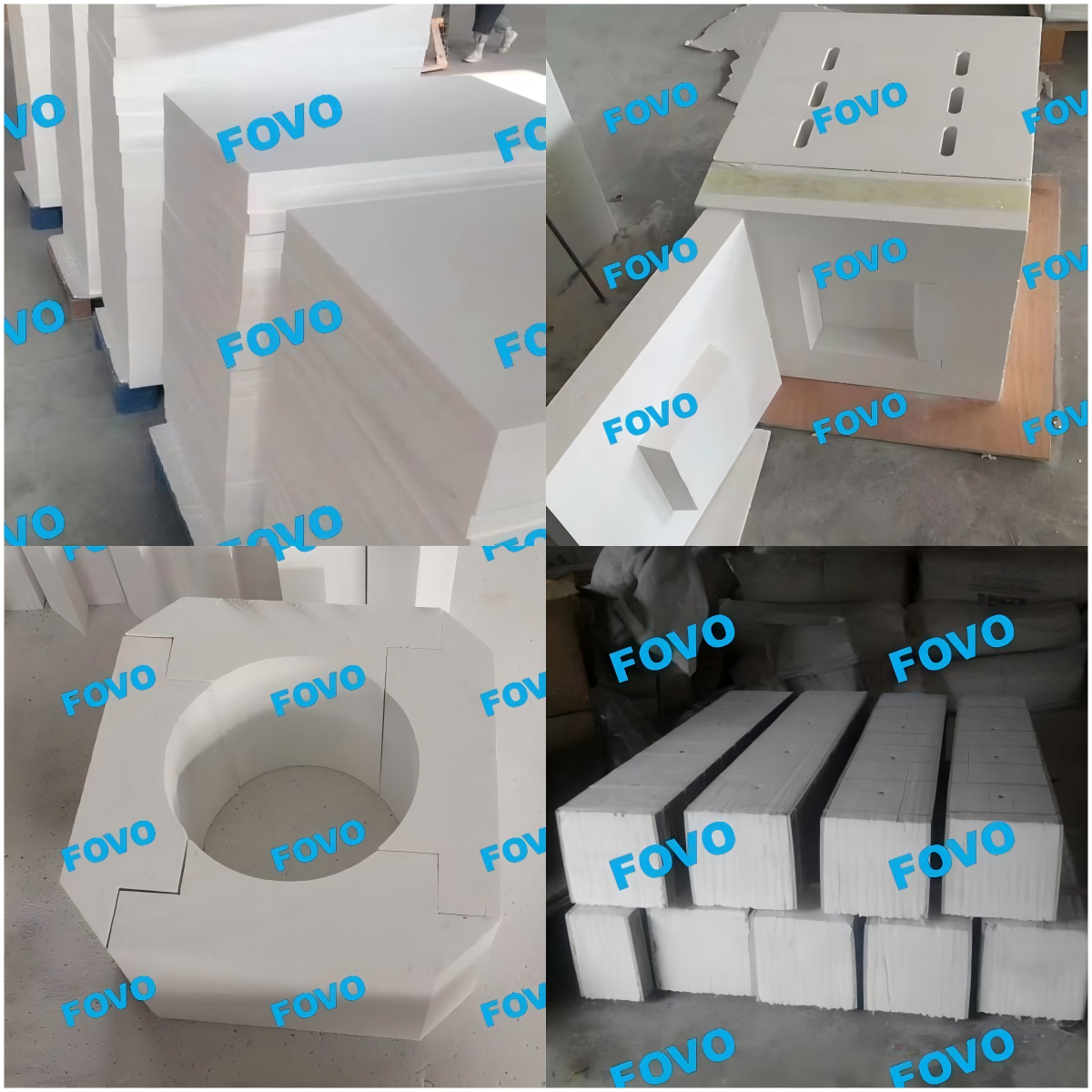
A high-temperature furnace's material list goes far beyond a few ceramic fiber boards. Lining boards, modules, high-temperature adhesives, crucibles, and alumina tubes — these materials are distributed in different parts of the furnace chamber and serve different functions. When procuring these materials, furnace manufacturers face a choice: purchase from different suppliers separately, or purchase as a package from one supplier?
Typical Material List for a High-Temperature Furnace
Lining boards. Customized to furnace chamber dimensions for wall insulation. Different temperature ranges correspond to different materials: standard ceramic fiber board for 1500°C, polycrystalline mullite board for 1600°C, and alumina fiber board for 1700–1900°C.
Modules. Used for furnace roofs, doors, and irregular areas. The folded structure of modules adapts to complex geometries and is fixed to the furnace shell with anchors during installation. Common specifications include 1430°C zirconia-containing modules and 1600°C polycrystalline mullite modules.
High-temperature adhesive. Used for joining and sealing between boards, and between boards and modules. During lining installation, the adhesive fills gaps and prevents heat from leaking through joints.
Crucibles. Used in melting or sample processing scenarios. High-purity alumina crucibles (Al₂O₃>99%) are suitable for high-temperature melting and sintering experiments.
Alumina tubes. Used for thermocouple protection or atmosphere introduction. High-purity alumina tubes have good chemical stability at high temperature and do not react with most atmospheres.
Pain Points of Separate Procurement
High lead time coordination costs. Different suppliers have different production cycles. Furnace manufacturers must track the progress of each material batch separately and coordinate arrival times. If one material is delayed, the entire furnace assembly schedule is affected.
Inconsistent dimensional standards. Different suppliers may have inconsistent machining tolerances. If the mating dimensions of boards and modules do not match, gaps or interference may occur during installation. This is especially true for boards in multi-layer structures, where dimensional tolerance consistency directly affects lining sealing.
Accumulated management costs. Multiple suppliers mean multiple contracts, multiple payments, multiple logistics arrangements, and multiple after-sales communication channels. For furnace manufacturers with project-based production, these management costs rise quickly as the number of suppliers increases.
The Practical Value of One-Stop Supply
Unified lead time. All materials are produced in the same batch, with consistent lead times. Furnace manufacturers can arrange assembly schedules around a single time milestone without reserving waiting time for different materials. A unified lead time of 15–21 days provides a predictable rhythm for project-based furnace manufacturers.
Dimensional matching. Boards, modules, crucibles, and tubes are machined in the same production system, with unified dimensional tolerances. Mating dimensions of boards and modules can be coordinated in advance, avoiding fit issues during installation. For custom furnace chambers, the value of this dimensional matching is especially evident.
Simplified procurement process. One contract, one payment, one logistics arrangement, one after-sales channel. The furnace manufacturer's procurement department can focus on material solution design rather than coordinating multiple suppliers.
Real-World Evidence from Customer Procurement Patterns
Real-world procurement data shows that high-temperature furnace manufacturers tend to order in combinations. Some customers purchase 1800°C boards and high-temperature adhesive together, while others purchase 1600/1800°C boards, 99% alumina crucibles, and alumina tubes together through an agent. These procurement behaviors indicate that furnace manufacturers have a natural tendency toward package procurement when purchasing lining materials.
The logic behind this tendency is that the project-based production model of furnace manufacturers requires material supply to match the project rhythm. Separate procurement increases coordination costs, while one-stop supply reduces exactly these costs.
The Combination of No MOQ and Custom Capability
Another value of one-stop supply is that furnace manufacturers can order according to project needs without having to meet MOQ requirements for each material separately. Custom-sized boards, crucibles, and tubes can be produced in the same batch, ensuring dimensional matching while also reducing inventory pressure.
For furnace manufacturers, this means they can complete the entire procurement from lining boards to supporting materials at one supplier, without having to purchase unnecessary materials to meet different suppliers' MOQ requirements.
Conclusion
The core value of supporting procurement for high-temperature furnace linings is not the lowest price per piece, but consistent lead times, dimensional matching, and simplified management. For project-based furnace manufacturers, the reduction in coordination costs brought by one-stop supply is often more valuable than the price difference between individual materials.