Ceramic Fiber Board vs. Module: Which is Best for Furnace Lining?
- Share
- Issue Time
- Oct 21,2026
Summary
Boards or modules? The choice depends on furnace geometry and temperature. Compare ceramic fiber boards and modules for optimal furnace lining performance.
Ceramic Fiber Board vs. Module: Which is Best for Furnace Lining?
When designing a furnace lining, engineers frequently face a choice between ceramic fiber boards and ceramic fiber modules. While both are made from similar aluminosilicate fibers, their manufacturing processes and physical structures make them suitable for different parts of the furnace.
Ceramic Fiber Boards: Rigidity and Precision
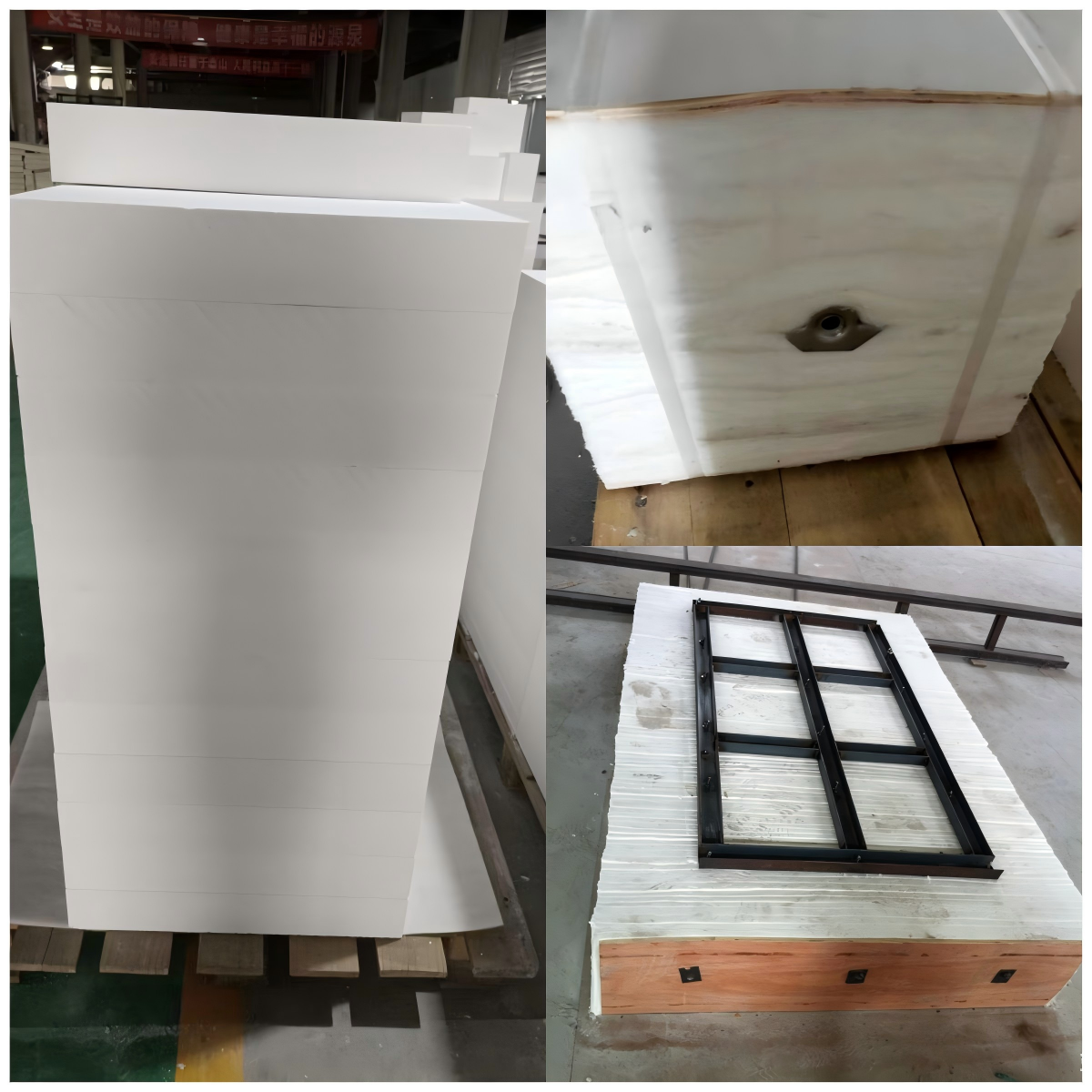
Ceramic fiber boards are typically manufactured through a pressing process. The wet fiber slurry is pressed into shape, resulting in a dense, rigid panel. Because of this high density, pressed boards offer excellent mechanical strength and resistance to gas flow erosion.
Boards are the preferred choice for furnace walls, hearths, and bottoms. They provide a flat, stable surface that can withstand physical contact and high-velocity gas streams. Additionally, pressed boards can be CNC machined to tight tolerances (±1mm), making them ideal for areas where precise fitting is required to prevent heat bridges.
Ceramic Fiber Modules: Flexibility and Shrinkage Compensation
Ceramic fiber modules are made by folding ceramic fiber blanket into a block, which is then compressed and anchored to the furnace shell. The key advantage of a module is its pre-compression.
When installed, the module expands to tightly fill the space, compensating for the thermal shrinkage that occurs during high-temperature operation. This makes modules particularly effective for furnace roofs, where flat boards might sag or open up gaps over time. Modules are also faster to install over large surface areas, reducing labor costs.
Combining Both for Optimal Performance
In many industrial furnaces, the best solution is a hybrid design. The walls and hearth use pressed boards for structural integrity and resistance to erosion. The roof and irregular areas use modules to compensate for shrinkage and simplify installation.
At the interface between boards and modules, careful design is required. The materials may have different shrinkage rates, so joints must be staggered or sealed properly. By understanding the mechanical and thermal differences between pressed boards and folded modules, furnace builders can maximize the efficiency and lifespan of the entire lining.