Why Density Matters in Pressed Ceramic Fiber Boards
- Share
- Issue Time
- Oct 27,2026
Summary
High density means better resistance to gas flow erosion and mechanical strength. Learn why pressed boards are the best choice for furnace hot faces.
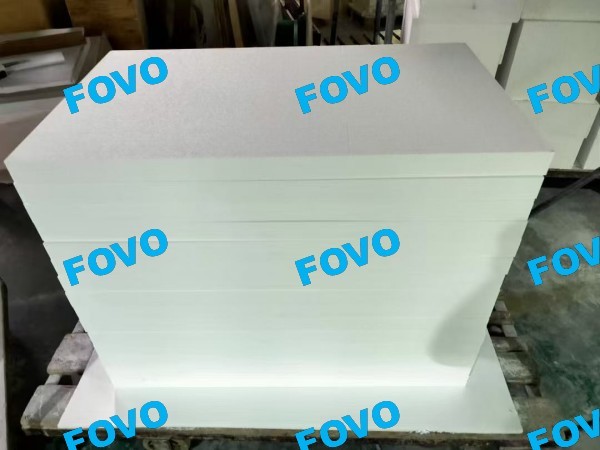
Why Density Matters in Pressed Ceramic Fiber Boards
When selecting ceramic fiber boards for industrial furnace linings, temperature rating is usually the first consideration. However, the physical density of the board is equally critical, especially for the hot face of the furnace.
Ceramic fiber boards are manufactured using a wet pressing process, which allows for precise control over density. Here is why high-density pressed boards outperform lower-density alternatives in demanding furnace environments.
1. Resistance to Gas Flow Erosion
In furnaces with high gas velocities or turbulent atmospheres, lower-density insulation materials can be eroded over time, causing dust and fiber carryover. High-density pressed boards (typically 300 to 500 kg/m³) have a tighter fiber matrix. This makes them highly resistant to erosion from hot gas streams, extending the lifespan of the lining.
2. Mechanical Strength and Structural Integrity
Pressed boards are rigid. When used in furnace walls, hearths, or as a support layer for other refractories, they do not sag or compress under their own weight. This structural stability is vital for maintaining the thermal design of the furnace and preventing gaps from opening up at high temperatures.
3. Machinability
Because of their high mechanical strength, pressed boards are ideal for CNC machining. They can be cut, grooved, and drilled into complex shapes without crumbling. This allows furnace builders to create tight-fitting custom parts with ±1mm tolerances, eliminating thermal bridges.
We supply high-density ceramic fiber boards in the 1400°C to 1900°C range, offering the perfect balance of insulation and structural integrity for high-temperature furnaces.