High-Purity Alumina Crucibles — Properties and Applications
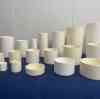
High-purity alumina crucibles (Al₂O₃ >99%) for rare earth and precious metal melting, ceramic sintering, and laboratory thermal analysis. Custom sizes available.
Aug 11,2026
High-purity alumina crucibles (Al₂O₃ >99%) for rare earth and precious metal melting, ceramic sintering, and laboratory thermal analysis. Custom sizes available.
Aug 11,2026

Ceramic fiber board applications in heat treatment, metallurgical, and ceramic furnaces. Energy savings of 15–30%, low thermal conductivity, and custom sizes from FOVO Thermal.
Aug 14,2026

Avoid these 5 common mistakes when installing ceramic fiber boards in your furnace. Learn proper installation techniques for expansion gaps, anchoring, and surface treatment.
Aug 6,2026

Polycrystalline ceramic fiber boards are widely used across multiple industrial sectors due to their high-temperature resistance, low thermal conductivity, and lightweight properties. Below are their core application areas and specific use cases.
Mar 25,2025
Polycrystalline Ceramic Fiber Boards are becoming an essential material in laboratory settings, thanks to their exceptional thermal insulation properties and durability. These high-performance boards are widely used in laboratory furnaces, kilns, and high-temperature testing equipment, providing reliable insulation and energy efficiency.
Mar 18,2025
The construction difficulty of polycrystalline fiberboards mainly depends on specific construction techniques and application scenarios.
Mar 6,2025

Polycrystalline fiberboard is a new - type high - temperature refractory material, mainly made of polycrystalline mullite fiber or polycrystalline alumina fiber.
Oct 9,2024
The main differences between silicon - molybdenum rods and silicon - carbon rods in high - temperature electric furnaces lie in their operating temperatures, applications, materials, appearances and scopes of application.
Nov 14,2024
The main differences between silicon - molybdenum rods and silicon - carbon rods in high - temperature electric furnaces lie in their operating temperatures, applications, materials, appearances and scopes of application.
Nov 14,2024
Silicon - carbon rods and silicon - molybdenum rods are commonly - used heating elements in high - temperature electric furnaces, and they each have their own characteristics and are suitable for different application scenarios.
Jun 21,2024
Silicon - molybdenum rods and silicon - carbon rods are mainly used as heating elements in high - temperature electric furnaces. They can maintain stable performance in a high - temperature environment and ensure uniform temperature inside the furnace, meeting various process requirements.
May 15,2024
Pre - heating during the start - up of a high - temperature electric furnace is carried out to protect the equipment, improve operational efficiency, optimize product quality and increase material utilization.
Sep 20,2024
When restarting the high - temperature electric furnace after shutting it down, the following steps should be followed.
Aug 23,2024
When using a high - temperature electric furnace, the following measures should be taken to ensure safety
Oct 16,2024